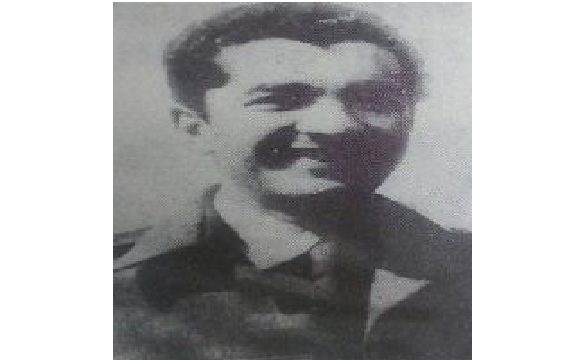
Indian Army
Mohammed Ali Raaz Sheikh, VrC
Major · 16 Light Cavalry, The Armoured Corps
Date of Birth
6 March 1931
Balidan Diwas
12 September 1965
Place of Supreme Sacrifice
Gadgor, Sialkot sector, Pakistan
State of Origin
Mangrol, Gujarat
Service Number
IC-6850
Unit / Regiment
16 Light Cavalry, The Armoured Corps
Operation
Operation Nepal
War / Conflict
Indo-Pak War 1965
Biography
Major Mohammed Ali Raaz Sheikh was born on 6 March 1931 into a distinguished princely family of Mangrol in Gujarat, a background that instilled in him a deep sense of duty and discipline from an early age. He received his early education in Rajkot, where he displayed notable qualities of leadership and determination. Motivated by a desire to serve the nation, he qualified for the Indian Military Academy at Dehradun and was commissioned as a Second Lieutenant on 6 June 1954, joining the 16th Light Cavalry, one of the oldest and most distinguished regiments of the Armoured Corps. Over the following decade he gained extensive expertise in armoured tactics, mobility and battlefield coordination. During 1964–65 he served as Aide-de-Camp to General J. N. Chaudhuri, the Chief of Army Staff, an appointment reserved for officers of exceptional promise. As tensions with Pakistan escalated in 1965, he returned to his parent regiment to serve in the field. With the outbreak of the Indo-Pak War of 1965, the 16th Light Cavalry, part of 1 Armoured Brigade under I Corps, was committed to the counter-offensive in the Shakargarh Bulge, known as Operation Nepal. Major Sheikh was entrusted with command of 'A' Squadron and, leading from the front, guided his squadron across the International Border on 8 September 1965. Reaching the vicinity of Gadgor by around 0900 hours, the regiment fought a prolonged and intense armoured battle against Pakistan's 25 Cavalry, destroying eight Patton tanks and two recoilless guns. Tasked with a bold outflanking manoeuvre from the south-west, Major Sheikh chose to lead it personally, and his tank was the first to draw enemy fire. Grievously wounded in the neck and right shoulder, he refused to withdraw and continued to command and direct his squadron, sustaining the momentum of the attack. He was later evacuated and succumbed to his wounds on 12 September 1965. For his exceptional bravery, inspiring leadership and supreme sacrifice, he was posthumously awarded the Vir Chakra.
Sources
Information compiled from publicly available official and historical sources.
Veergati is an independent digital memorial and is not affiliated with the Government of India. Disclaimer & Sources
Remembered Alongside
Lieutenant Colonel Ardeshir Tarapore
17th Poona Horse · 1965
Second Lieutenant Arun Khetarpal
17 Poona Horse · 1971
Major Bhupinder Singh
4 Horse (Hodson's Horse), The Armoured Corps · 1965
Lieutenant Colonel Bikramjeet Singh
16 Armoured Regiment · 2016
Major Dhruv Yadav
75 Armoured Regiment · 2015
Major Gurphej Singh Cheema
6 Lancers, The Armoured Corps · 2011