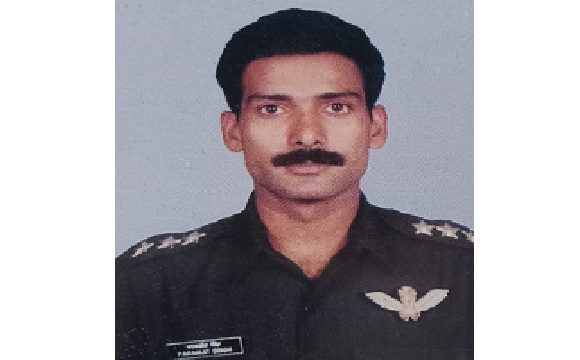
Indian Army
Paramjit Singh
Captain · 661 Army Aviation Squadron, Army Aviation Corps
Date of Birth
13 August 1969
Balidan Diwas
14 November 1999
Place of Supreme Sacrifice
Sharifabad, Badgam district, Jammu & Kashmir
State of Origin
Gurgaon, Haryana
Service Number
IC-51218P
Unit / Regiment
661 Army Aviation Squadron, Army Aviation Corps
Operation
Operation Rakshak
War / Conflict
Kargil War
Biography
Captain Paramjit Singh hailed from Daulatabad village in the Pataudi tehsil of Gurgaon district in Haryana and was born on 13 August 1969. The son of Indian Air Force veteran Warrant Officer Ram Avtar, he was drawn to the armed forces from his early years. Growing up near the Palam area, he was fascinated by the aircraft that flew overhead and dreamt of becoming a pilot. After his class 12, he cleared the prestigious NDA examination and joined the 80th NDA Course, following which he moved to the Indian Military Academy, Dehradun, for further training. He passed out of IMA Dehradun on 13 June 1992 as part of the 90th Course and was commissioned as a Lieutenant into the 316 Medium Artillery Regiment of the Regiment of Artillery. After about four years in his parent unit, he opted for the Army Aviation Corps, trained as a helicopter pilot at Hyderabad, and earned his wings before being posted to the 31 R&O Flight under 663 Army Aviation Squadron at Jalandhar. When his flight moved to the Kargil sector on 23 May 1999, he flew numerous daring missions, carrying out reconnaissance and evacuating battle casualties during the Kargil War. On 26 July 1999, the last day of the war, his Cheetah helicopter developed a serious snag and crashed in the Drass sector, leaving him seriously injured. After recuperating at the Base Hospital in Srinagar, he volunteered to rejoin his flight, which was deployed at Sharifabad in Badgam district as part of Operation Rakshak. On the night of 13 November 1999, amid the extreme cold of the valley, Captain Paramjit Singh retired to his room. On the morning of 14 November 1999, he was found to have succumbed to carbon monoxide released by a diesel-powered generating set used to keep the quarters warm. For his meritorious service and devotion to duty, he was awarded the General Officer Commanding-in-Chief Northern Command Commendation Card.
Sources
Information compiled from publicly available official and historical sources.
Veergati is an independent digital memorial and is not affiliated with the Government of India. Disclaimer & Sources