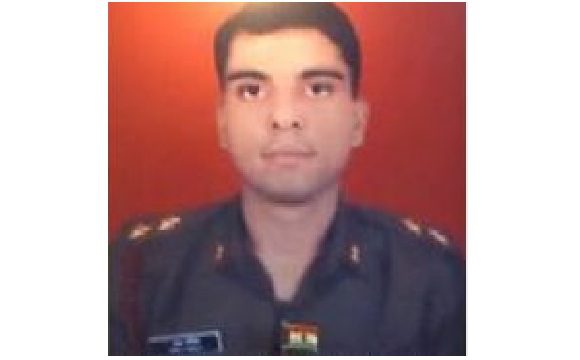
Date of Birth
13 August 1977
Balidan Diwas
10 June 2002
Place of Supreme Sacrifice
Line of Control, Jammu & Kashmir
State of Origin
Ajmer, Rajasthan
Service Number
SS-38789
Unit / Regiment
69 Field Regiment, The Regiment of Artillery
Operation
Operation Parakram
Biography
Lieutenant Abhay Pareek was born on 13 August 1977 to Shri K S Pareek and Smt Prabha Pareek. From an early age he displayed exceptional talent, discipline and an unwavering commitment to excellence. A gifted musician and sportsman, he was adjudged the Best Instrumental Musician and Singer and the Best Tabla Player in inter-school competitions in New Delhi, and excelled on the basketball and volleyball courts. At Government College, Ajmer, he emerged as one of the institution's most outstanding students, earning the prestigious Gibson Award for all-round excellence, being adjudged the Best NCC Cadet, and winning gold in the boxing championships for three consecutive years. Inspired by a deep sense of patriotism, Abhay chose a career in the armed forces and was commissioned into the Indian Army in September 2000, joining the 69 Field Regiment of the Regiment of Artillery. Soon after, he was posted to Jammu & Kashmir along the Line of Control, one of the most challenging and sensitive operational areas in the country, where his leadership and devotion quickly earned him the respect and affection of his comrades. During Operation Parakram, launched after the December 2001 attack on the Indian Parliament, Lt Abhay served as a Forward Observation Officer from a position barely 100-150 metres from the enemy posts. On 10 June 2002, as the situation along the LoC escalated into intense cross-border firing, he took charge with remarkable composure, accurately assessed the hostile positions and directed a devastating artillery bombardment that inflicted heavy casualties on the enemy. In the fierce exchange that followed, an enemy anti-tank guided missile struck near his position, leaving him critically wounded. Even as he was being evacuated, he saluted his senior officers, shook hands with his soldiers and lifted their morale, telling them, 'Main wapas aaonga... I shall come back.' He later succumbed to his injuries, making the supreme sacrifice in the service of the nation. His courage, leadership and selfless devotion to duty continue to inspire generations of soldiers and citizens alike.
Sources
Information compiled from publicly available official and historical sources.
Veergati is an independent digital memorial and is not affiliated with the Government of India. Disclaimer & Sources
Remembered Alongside
Captain Ajay Singh Rana
60 Field Regiment, The Regiment of Artillery · 2003
Captain Rapolu Veera Raja Reddy
69 Field Regiment, The Regiment of Artillery · 2002
Major Yogesh Gupta
25 Rashtriya Rifles (274 Medium Regiment, Regiment of Artillery) · 2002
Lieutenant Archit Verdia
175 Medium Regiment, The Regiment of Artillery · 2011
Gunner Raj Kumar
315 Field Regiment, Regiment of Artillery · 1999
Lance Naik Rohitashwa Gurjar
288 Medium Regiment, Artillery Regiment · 2008