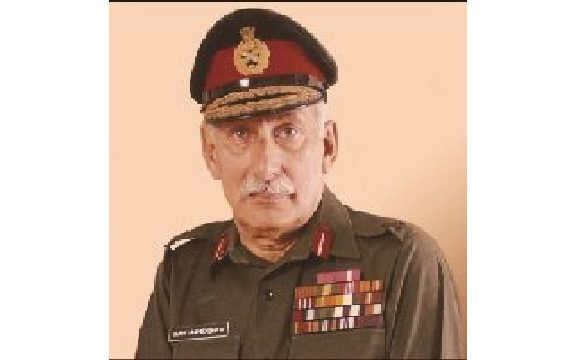
Indian Army
Sam Hormusji Framji Jamshedji Manekshaw
Field Marshal · 8 Gorkha Rifles
Date of Birth
3 April 1914
Balidan Diwas
27 June 2008
Place of Supreme Sacrifice
Wellington, Tamil Nadu
State of Origin
Amritsar, Punjab
Unit / Regiment
8 Gorkha Rifles
War / Conflict
Indo-Pakistani War 1971
Biography
Sam Hormusji Framji Jamshedji Manekshaw was born on 3 April 1914 in Amritsar into a Parsi family. His father, Dr. Hormusji Manekshaw, was a distinguished medical practitioner who had served with the British Indian Army during World War I. The family later relocated to Valsad, Gujarat, where Sam spent his early childhood in a household emphasizing education and discipline. Sam attended Sherwood College in Nainital, where he developed confidence, leadership qualities, and his characteristic sharp sense of humor. At age 15, he initially aspired to study medicine in London, but when his father declined, deeming him too young for abroad studies, the determined young man took a different path. In an act of youthful determination, Sam appeared for the entrance examination to the newly established Indian Military Academy on October 1, 1932. He was successfully selected as part of the Academy’s historic first batch of 40 cadets, known as “The Pioneers.” He received his commission as a Second Lieutenant in 1934 into the Frontier Force Regiment of the British Indian Army. During World War II, serving as a Captain with the 4/12 Frontier Force Regiment in Burma in 1942, he demonstrated exceptional courage at the Battle of Sittang Bridge. Despite sustaining nearly fifty percent casualties among his men, he led a critical counterattack that secured this strategically vital bridge for Allied forces. He suffered severe wounds from machine gun fire to his abdomen. His commanding officer, Major General David Cowan, was so impressed by his bravery that he pinned his own Military Cross ribbon on Manekshaw’s chest, stating: “A dead person cannot be awarded a Military Cross.” Following independence, Manekshaw played a key role shaping the newly formed Indian Army. He accompanied V. P. Menon to Srinagar during the Instrument of Accession signing by Maharaja Hari Singh and contributed to planning Operation Polo in September 1948, which integrated Hyderabad into the Indian Union. His finest achievement came during the 1971 Indo-Pakistani War as Chief of Army Staff. Following Pakistani air strikes on Indian airbases on December 3, 1971, General Manekshaw devised and executed a comprehensive military strategy operating simultaneously on both western and eastern fronts. The conflict concluded decisively in just thirteen days, resulting in over 90,000 Pakistani troops surrendering and Bangladesh’s emergence as an independent nation. On January 1, 1973, he became the first Indian Army officer elevated to the rank of Field Marshal. He received the nation’s highest civilian honors, including the Padma Vibhushan and Padma Bhushan. Field Marshal Sam Manekshaw passed away on June 27, 2008, at age 94 at the Military Hospital in Wellington, leaving behind a legacy synonymous with courage, leadership, and unwavering national dedication.
Sources
Information compiled from publicly available official and historical sources.
Veergati is an independent digital memorial and is not affiliated with the Government of India. Disclaimer & Sources
Remembered Alongside
Captain Gurbachan Singh Salaria
3/1 Gorkha Rifles · 1961
Major Kanwal Gulzar Singh
32 Rashtriya Rifles (5/9 Gorkha Rifles) · 1999
Captain Amit Joshi
7/11 Gorkha Rifles · 2002
Lieutenant Amit Singh
1/9 Gorkha Rifles · 2000
Rifleman Arun Kumar Rai
1/11 Gorkha Rifles · 1999
Lance Naik Bal Bahadur Thapa
7/8 Gorkha Rifles · 1989