Date of Birth
27 February 1961
Balidan Diwas
1 July 2001
Place of Supreme Sacrifice
Boban Watsar forest, Baramulla district, Jammu & Kashmir
State of Origin
Mysore, Karnataka
Service Number
IC-45879
Unit / Regiment
30 Rashtriya Rifles
Operation
CI & IS Ops
Biography
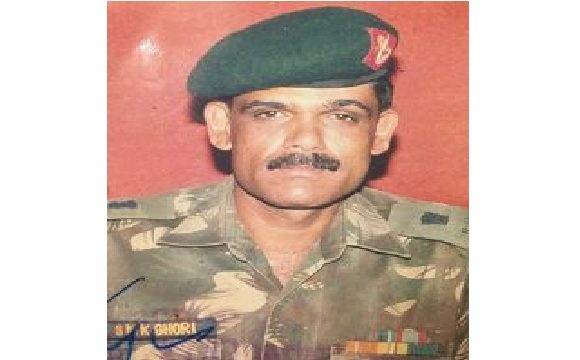
Major Shafeeq Mahmood Khan Ghori was born on February 27, 1961, in Mysore, Karnataka, to Shri Ghulam Mahmood Khan Ghori. His formative years were spent in Mysore, where he received his primary and secondary education at Maharaja's High School. He continued his academic pursuits at Maharaja's College, graduating with a degree that laid the foundation for his future endeavors. Driven by a profound sense of duty and patriotism, Major Ghori successfully cleared the rigorous selection process for the Officers' Training Academy (OTA) in Chennai. He joined the prestigious SS 43 course, demonstrating his commitment to serving the nation. Upon completing his training, he was commissioned as a Second Lieutenant on March 7, 1987, at the age of 26. He was assigned to the 172 Field Regiment of the Regiment of Artillery, a critical combat support branch of the Indian Army. Throughout his career, Major Ghori consistently displayed exceptional professionalism and dedication. He quickly established himself as a proficient officer and a proud member of the artillery. His commitment to excellence was recognized in 1991-92, when he was awarded the 'General Officer Commanding-in-Chief Northern Command Commendation Card' for his meritorious service. His proficiency in marksmanship was further highlighted by his first-place victory in the Headquarters 16 Artillery Brigade Firing Competition in June 1992. Beyond his military duties, Major Ghori was an avid sportsman, participating actively in various regimental sports events. His passion for life extended to his love for singing. After serving with his parent regiment, Major Ghori was deputed to the 30 Rashtriya Rifles (RR) battalion, a unit deployed in Jammu and Kashmir (J&K) for counter-insurgency operations. This assignment placed him in one of the most challenging and volatile regions of India, where he faced the complexities of combating insurgency. Prior to his deployment in J&K, he had also served in Tripura in the northeast and Punjab, gaining valuable experience in diverse operational environments. This wide range of deployments speaks to his adaptability and the trust placed in his abilities by the Indian Army. Baramulla Operation: 01 July 2001. In 2001, Major Shafeeq Mahmood Khan Ghori was serving with the 30 Rashtriya Rifles (RR) battalion, a unit deployed in the Baramulla district of Jammu and Kashmir (J&K), engaged in counter-insurgency operations. On Sunday, July 1, 2001, his battalion received credible intelligence regarding the presence of militants in the dense Boban Watsar forest within the Baramulla region. Following the established operational protocols, Major Ghori, leading his troops, initiated a search and cordon operation to apprehend the militants. As the troops advanced into the forest, they encountered the militants, leading to a fierce exchange of gunfire. During the intense firefight, Major Ghori sustained critical gunshot wounds. Despite his own life-threatening injuries, Major Ghori observed that one of his soldiers had been critically wounded and was in immediate danger. Demonstrating extraordinary courage and a profound sense of duty, he prioritized the safety of his comrade over his own. Ignoring his own severe wounds, Major Ghori made the selfless decision to evacuate the injured soldier to a nearby jeep, aiming to shield him from the ongoing onslaught. While executing this act of unparalleled bravery and compassion, Major Ghori succumbed to his injuries and was martyred. Major Shafeeq Mahmood Khan Ghori's actions on that day exemplified the highest traditions of the Indian Army. His unwavering dedication to his duty, coupled with his remarkable compassion for his fellow soldiers, resulted in his supreme sacrifice. Prior to his martyrdom, Major Ghori's exemplary service and professionalism had been recognized with the Chief of Army Staff Commendation Medal on January 15, 2001. This award acknowledged his outstanding contributions and highlighted his status as an officer par excellence. His ultimate sacrifice cemented his legacy as a valiant soldier and a true hero.
Sources
Information compiled from publicly available official and historical sources.
Veergati is an independent digital memorial and is not affiliated with the Government of India. Disclaimer & Sources